
Stuck without a toothbrush? A clean finger, damp washcloth, or even a crunchy apple can disrupt plaque and remove food debris until you’re back to your normal routine. These methods are temporary, but they’re effective and safe when done right.
Forgetting a toothbrush while traveling, camping, or during a long workday is common. Even a short delay in cleaning your teeth can let plaque biofilm — that sticky, bacteria-filled layer — build up, leading to irritation and bad breath. The good news: you can still give your teeth a meaningful clean with everyday items.
Does Improvised Cleaning Really Work?
Yes — well enough to get you through a short stretch. The goal is not a deep professional clean. It’s to remove obvious debris, lower acidity after eating, and mechanically disturb the bacterial film that causes odor and gum inflammation. A clean cloth or even your finger can remove some plaque and food particles, just not as thoroughly as a toothbrush. Think of these alternatives as a bridge, not a permanent solution.
What the Science Says About Plaque Removal
Plaque must be physically broken up — rinsing alone won’t do it. Mechanical action (wiping, rubbing) provides meaningful plaque reduction, even without a toothbrush. Brushing without toothpaste is better than going to bed with completely unbrushed teeth. The motion matters.
Can These Methods Prevent Cavities?
Short-term: they can reduce cavity-causing bacteria and help maintain a neutral pH. Long-term: no. Flouride toothpaste and a proper toothbrush are non-negotiable for preventing cavities. These hacks are for emergencies only.
| Method | Surface Plaque Removal | Interdental Cleaning | Breath Freshening |
|---|---|---|---|
| Regular toothbrush + fluoride paste | Excellent | Good | Very good |
| Damp washcloth / finger | Moderate | Poor | Fair |
| Vigorous water swishing | Low | Low | Fair |
| Chewing sugar-free gum | Low | None | Good |
| Crunchy vegetables (apple, carrot) | Low–Moderate | None | Good |
8 Simple Ways to Clean Your Teeth When You Don’t Have a Toothbrush
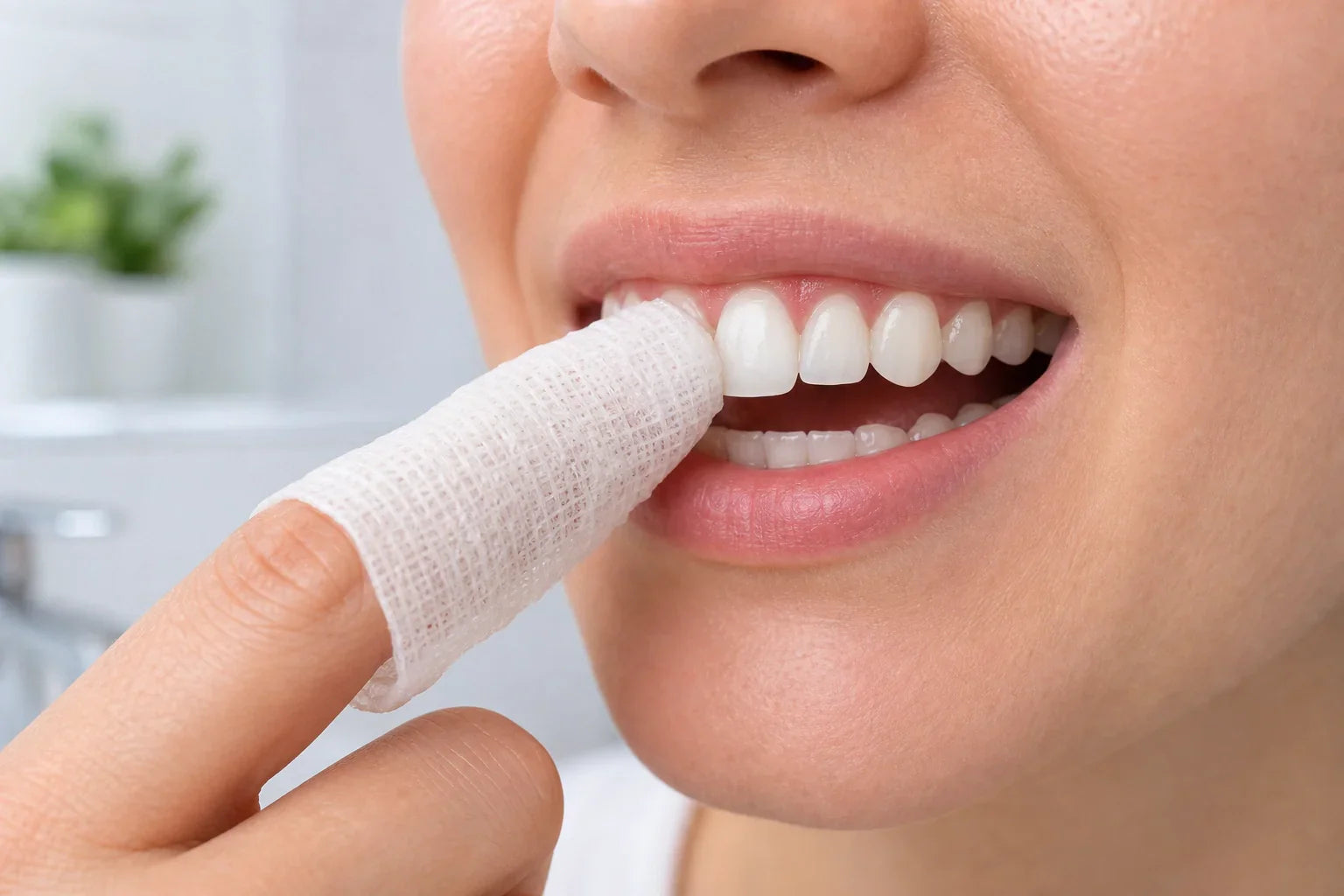
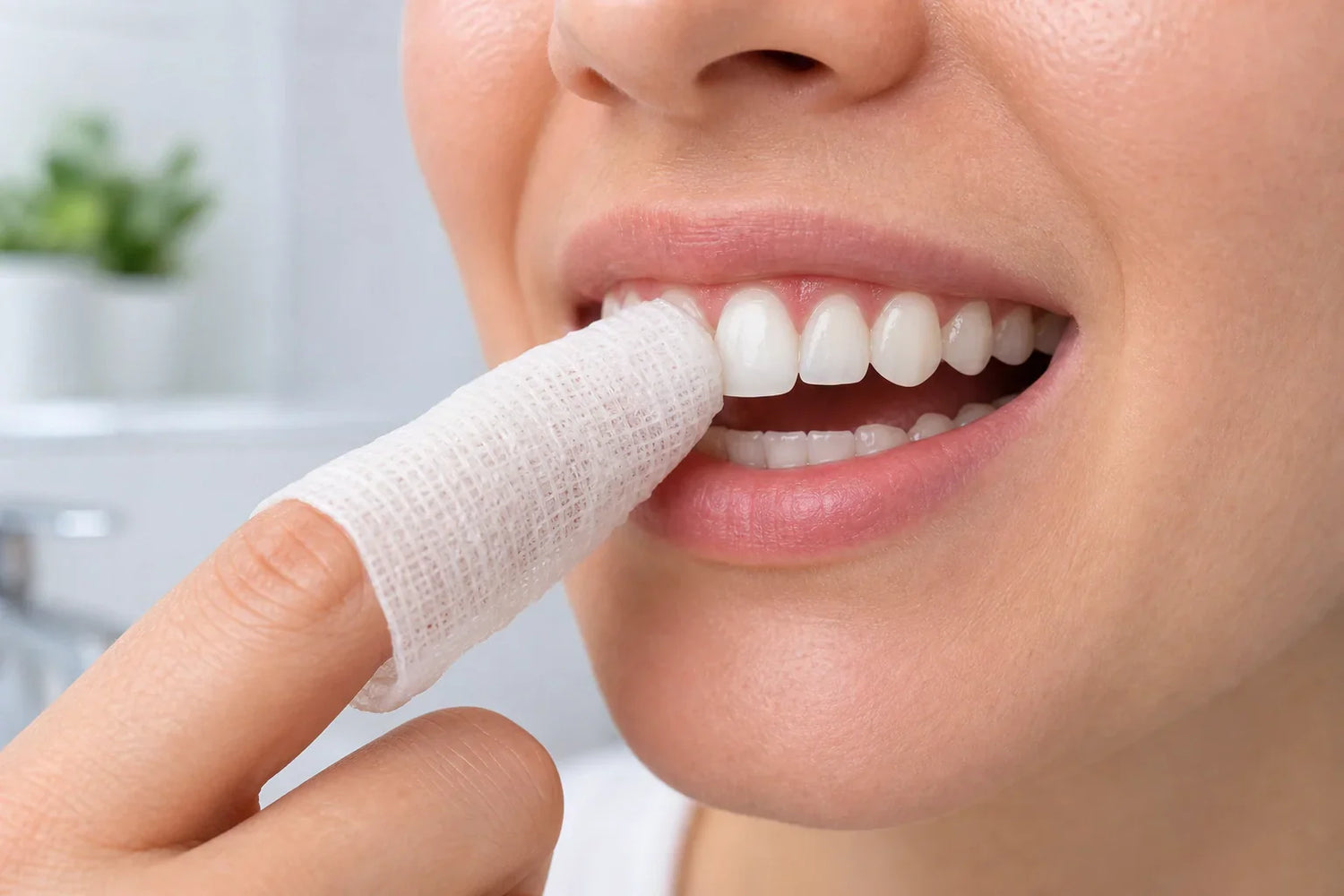
1. Use a Clean, Damp Washcloth or Paper Towel
This is one of the most effective alternatives. The rough texture mimics bristles.
- Wrap a clean washcloth or thick paper towel around your index finger.
- Dampen it with water. Add a pea-sized amount of toothpaste if you have it.
- Gently rub each tooth in small circular motions, starting from the gumline and working toward the biting surface. Don’t forget to wipe your tongue.
- Rinse your mouth thoroughly, swishing water back and forth to flush away loosened debris.
Pro tip: A washcloth works better than a paper towel — its textured fibers grab more plaque.
2. Wrap Your Finger With Gauze or a Cotton Pad
If your gums are sensitive, soft gauze or a clean cotton round is less abrasive than a washcloth. Follow the same steps: wrap, dampen, add toothpaste, and clean with gentle circles. Compared to a washcloth, gauze conforms more easily to tooth surfaces but may tear quicker.

3. Swish Water — Really Vigorously
No sink? No problem. Vigorous swishing is your fastest first step.
- Take a mouthful of clean water.
- Swish forcefully for at least 30 seconds to dislodge food particles.
- Spit and repeat.
For extra benefit, dissolve a pinch of salt in warm water — salt has natural antibacterial qualities and can help eliminate some plaque-causing germs.
4. Chew Sugar-Free Gum (Especially With Xylitol)
Chewing stimulates saliva flow, your mouth’s natural defense. Saliva washes away debris, neutralizes acids, and helps mineralize enamel. Sugar-free gum with xylitol goes a step further by reducing cavity-causing bacteria. Chewing sugarless gum for 20 minutes after a meal can help prevent cavities. Just don’t chew if you have jaw pain or dental work that could be damaged.
5. Use a Twig or Miswak (Nature’s Toothbrush)
The miswak stick has been used for centuries. You don’t need water or toothpaste.
- Peel about 1 cm of bark from the tip.
- Chew the exposed fibers until they separate into a soft-bristle brush.
- Hold the stick at a 45-degree angle and brush your teeth with short circular strokes.
Miswak is a biodegradable, travel-friendly option that can reduce bacteria and plaque. It’s perfect for camping trips where running water is scarce.

6. Make a Paste With Baking Soda (If Available)
A tiny amount of baking soda can help due to its mild abrasive and acid-neutralizing power. But it must be used carefully.
- Mix a pinch of baking soda with a few drops of water to form a thin paste.
- Apply with your finger or a damp cloth and gently wipe teeth.
- Never scrub hard — baking soda can wear down enamel if overused. Limit this to occasional emergencies only.
7. Eat Crunchy, Fibrous Fruits and Vegetables
An apple, carrot, or celery stalk won’t replace brushing, but the crisp texture can physically scrub tooth surfaces and stimulate saliva. This is especially helpful after a meal. Think of it as a light, edible wipe — it dislodges sticky food bits without damaging teeth.
8. Diluted Hydrogen Peroxide Rinse (With Extreme Caution)
Only if you have a 1.5% or 3% solution and can safely dilute it. Mix one part hydrogen peroxide with one part water. Swish for 30 seconds, then spit it out. Do not swallow. This can briefly reduce bacteria, but it’s harsh on oral tissues if misused. Avoid it entirely if you have sensitive gums or open sores.
Mouth-Cleaning Methods You Should Absolutely Avoid
Some internet hacks can do serious damage. Steer clear of:
- Abrasive powders (salt grains, charcoal): These can scratch enamel, leading to sensitivity and decay.
- Citrus juice or vinegar: Highly acidic — erodes enamel quickly, softening it for hours.
- Fingernail scraping: Damages gums and introduces harmful bacteria from under the nails.
- A borrowed toothbrush: Even from a partner, this can transmit viruses and bacteria.
When and Where These Emergency Methods Shine
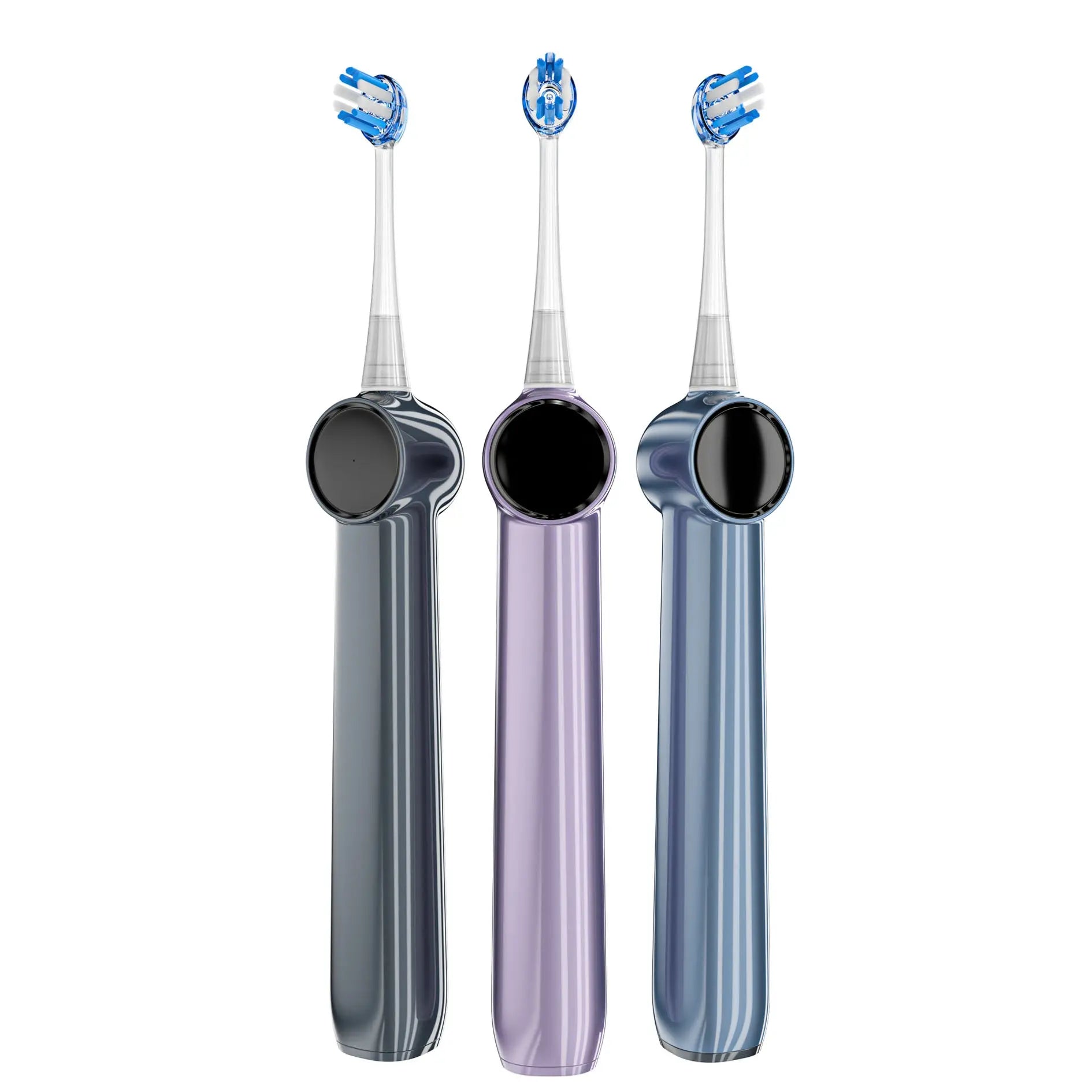
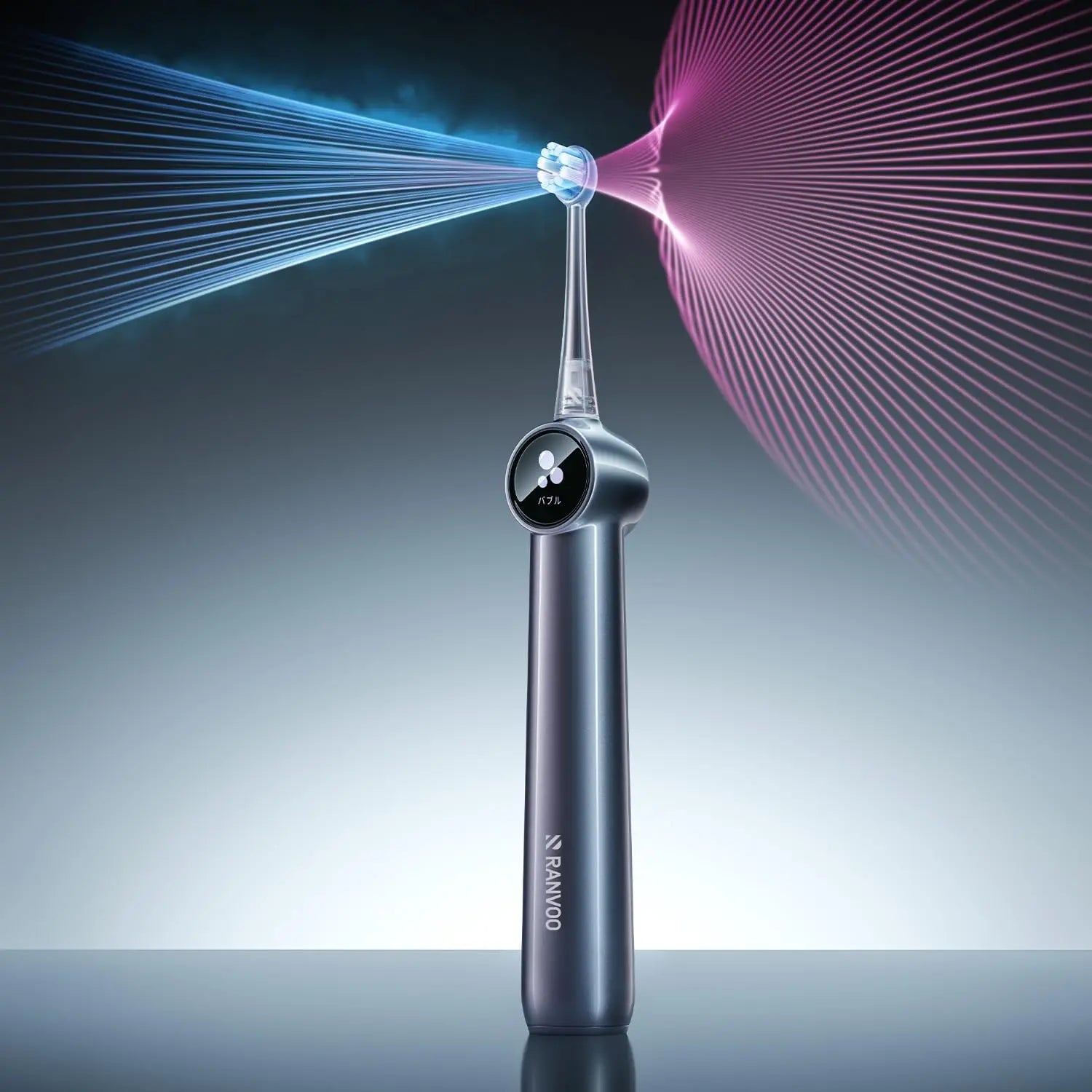
Travelers and campers benefit most from these techniques. While these methods are great for emergencies, for a reliable daily cleaning on the go, consider packing a compact electric toothbrush like the RANVOO AirJet X5. Its gentle bubble technology ensures effective cleaning without aggravating sensitive gums, making it ideal for frequent travelers who value both convenience and gum health. Keep a small emergency oral care kit: disposable textured tooth wipes, interdental brushes, sugar-free gum, and fluoride mouthwash. Many brands offer individually packaged wipes for a quick, sink-free clean.
If you wear braces or aligners, the damp cloth method works well around brackets — just be gentle to avoid dislodging wires. A proxabrush (interdental brush) is even better if you have one.
Keeping Your Breath Fresh Without a Brush
Clean teeth don’t always equal fresh breath. Tongue scraping is key — use the edge of a clean spoon or a damp cloth to wipe the tongue from back to front. Chewing on fresh parsley or mint leaves can also neutralize odors, and drinking unsweetened green tea provides antibacterial benefits.

After You Finally Get a Real Toothbrush
When you finally have access to a proper toothbrush, choose one that cares for your gums as much as it cleans your teeth. The RANVOO AirJet X5 uses innovative bubble-jet technology to gently sweep away plaque from all surfaces, including hard-to-reach areas, without the harsh scrubbing that can irritate sensitive gums. Brush thoroughly for two minutes with fluoride toothpaste, floss, and consider a fluoride mouthwash. Don’t over-brush to “catch up” — that can irritate gums and wear enamel. Simply return to your twice-daily routine and stay hydrated to support natural saliva production.
When to See a Dentist
If you’ve gone without proper brushing for several days and notice bleeding gums, persistent bad breath, or tooth sensitivity, schedule a check-up. These could signal gum inflammation or early decay that needs professional attention. Regular visits keep your smile healthy even when life throws a curveball.