
The short answer: Yes, electric toothbrushes can be safe and highly effective for kids — but only when introduced at the right age, with proper supervision, and with a brush designed specifically for children. Most pediatric dentists say age 3 is the earliest to start.
Parents often wonder if the buzzing, vibrating brush that works so well for adults is a smart — or safe — choice for their child. The answer isn’t a simple yes or no. It depends on your child’s age, motor skills, and how you guide the process. When done right, an electric toothbrush can transform nightly brushing battles into a healthier habit.
Why Switch? The Proven Benefits of Electric Toothbrushes for Children
Switching to an electric toothbrush isn’t just about novelty. The science behind the spin offers real advantages for growing smiles.
- Superior plaque removal. A clinical study in children aged 3–6 found that an oscillating-rotating electric brush removed 32.3% more plaque than a manual brush. For 7–9 year olds, the difference jumped to 51.9% more plaque removed.
- Built-in timers enforce the 2-minute rule. Most kids rush. A timer or musical pacer helps them brush long enough to actually clean every surface.
- Fun features improve compliance. Character themes, lights, and companion apps turn brushing into a game. When kids are excited, they brush more often and more thoroughly.
- Easier for small hands. The powered movement does the scrubbing work, so a child with developing dexterity can still get a deep clean.

When Can Kids Start Using an Electric Toothbrush? Age-by-Age Guidelines
The “magic number” isn’t one-size-fits-all, but developmental milestones give us a clear roadmap.
Infants and Toddlers (Ages 0–3): Why Manual Is the Safest Choice
For babies and young toddlers, stick with a manual toothbrush. An infant’s mouth is tiny, gums are sensitive, and they have no ability to control pressure. Most importantly, they cannot understand how to keep the brush head still on each tooth. A small, soft-bristled manual brush lets you gently clean erupting teeth without the risk of vibration surprising or hurting them.
Preschoolers (Ages 3–6): Introducing Electric Under Full Supervision
Around age 3, many children are ready for an electric toothbrush — but not to use it alone. This is the window to introduce a child-specific model. Before you start, check for these readiness signals:
- Your child can spit out toothpaste instead of swallowing it.
- They no longer bite down on the brush head.
- They are curious about your own electric brush and want to try.
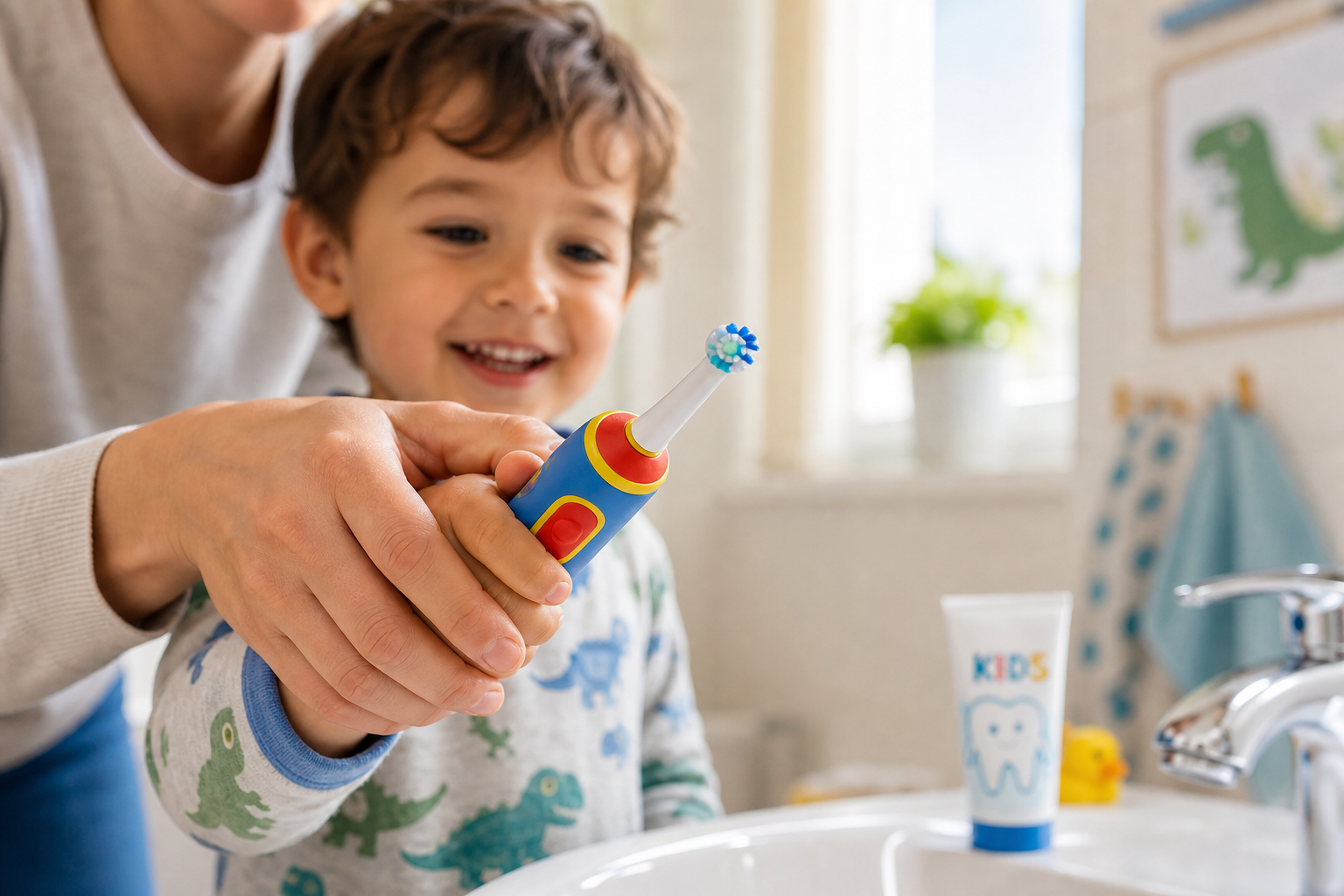
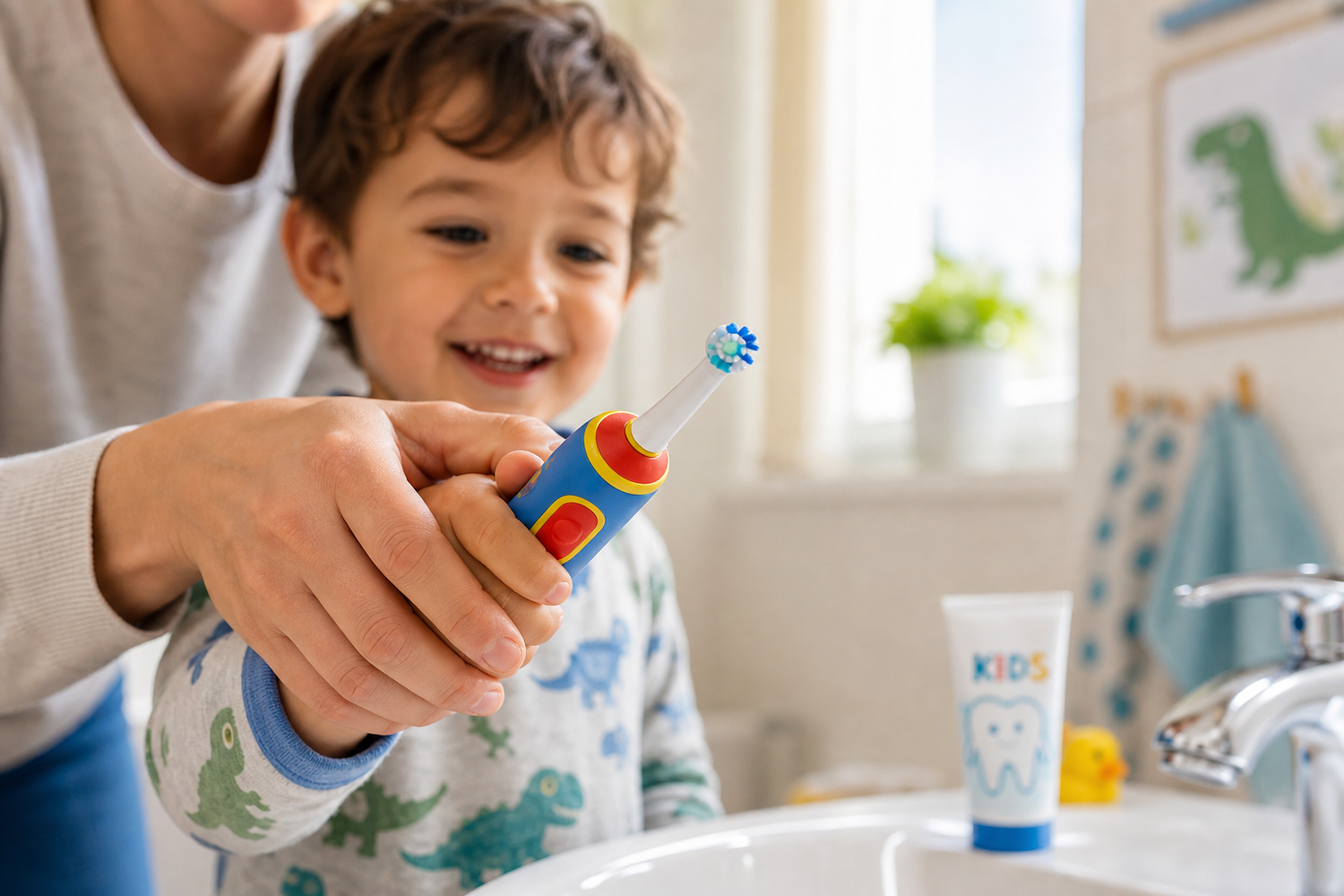
Always place a pea-sized amount of fluoride toothpaste on the brush head, guide their hand at a 45-degree angle toward the gumline, and let the brush do the work. You handle the movement; they provide the enthusiasm. At this stage, the electric brush is a shared tool, not a solo one.

Grade-schoolers and Teens (Ages 7+): Building Independent Habits
By age 7, many kids have the coordination to brush on their own — but that doesn’t mean you stop checking. Supervision should continue until you’re confident they can reach every back tooth and the gumline without rushing.
- Many 7-year-olds still benefit from a parent’s “spot check” once a day.
- Children with braces gain an even bigger edge: electric toothbrushes, especially oscillating-rotating heads, navigate around brackets and wires more effectively than a manual brush.
- Around age 8–12, kids can handle a rechargeable model with multiple cleaning modes, like a sensitive or orthodontic setting.
Safety First: How to Protect Your Child’s Teeth and Gums
Parents worry about over-vigorous vibrations harming baby teeth or delicate gums. The real risk is user error, not the tool itself. Follow these steps to guarantee safety.
Choosing the Right Soft-Bristled Brush Head and Gentle Mode
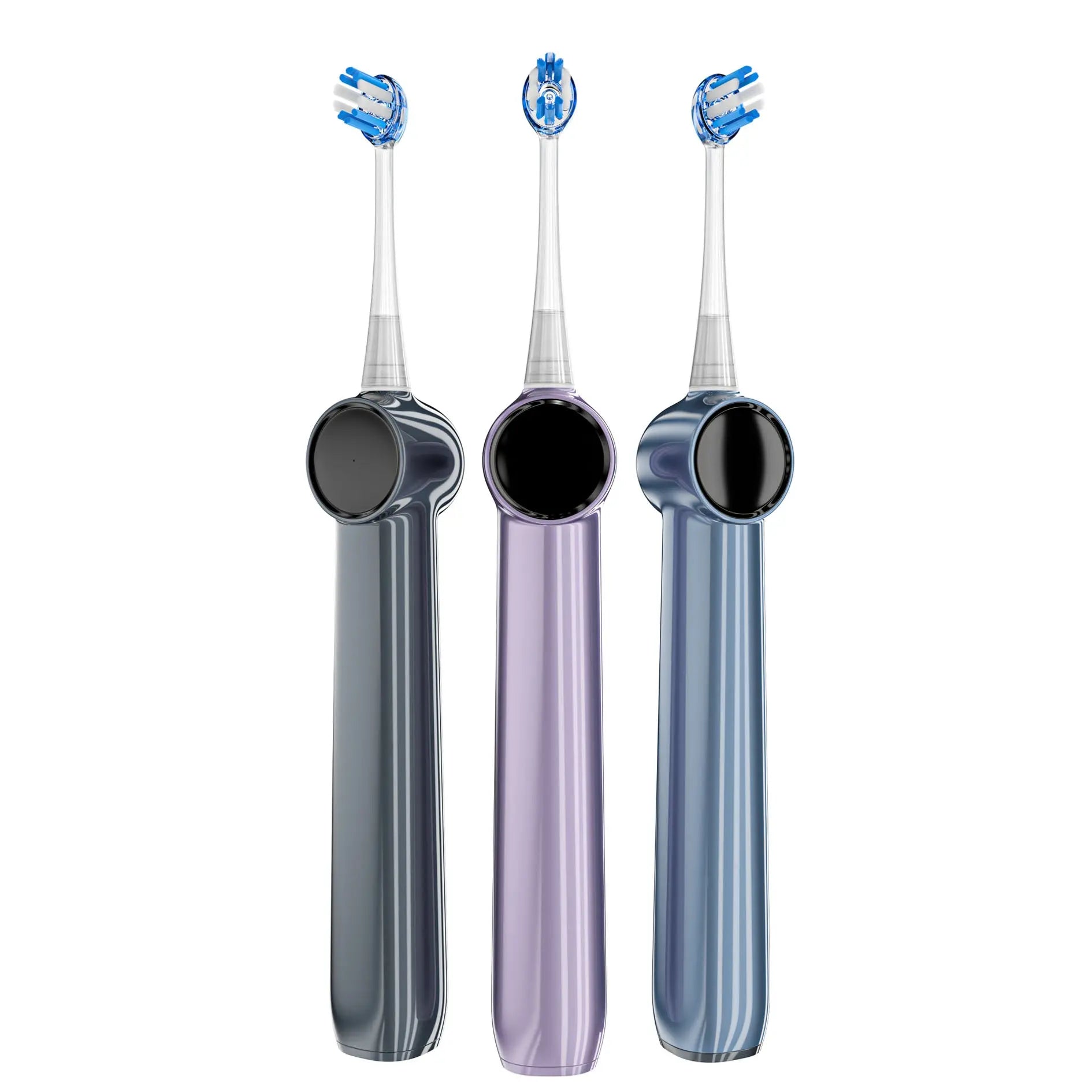
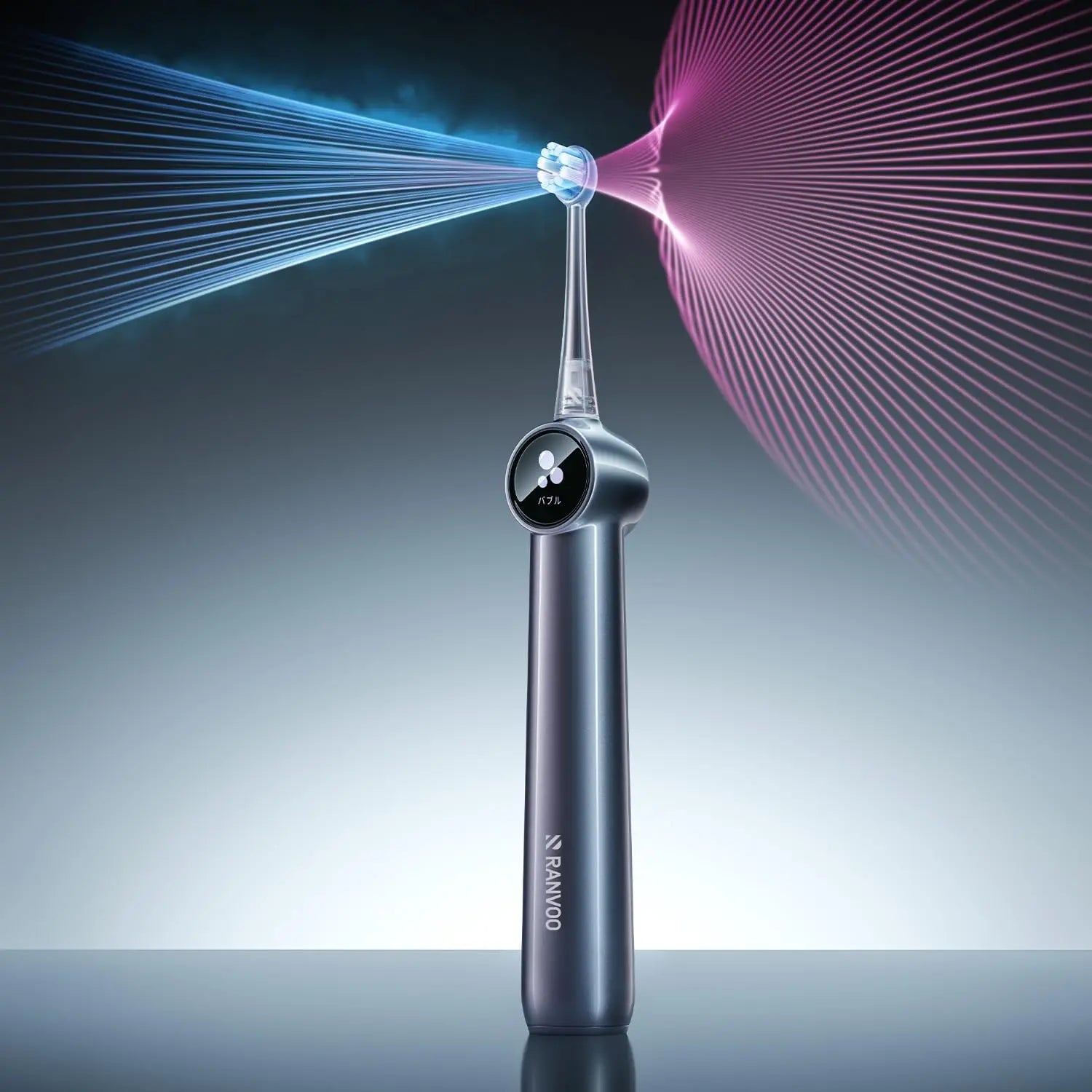
A child’s toothbrush head must be small and extra-soft. Never use an adult head. Select a brush with a dedicated “gentle” or “sensitive” cleaning mode if possible. Many child-specific electric brushes automatically run at lower speeds. Similarly, adult brushes designed for sensitivity, like the RANVOO AirJet X5, offer ultra-soft modes that are safe for receding gums.
- Soft, rounded bristles prevent micro-abrasions on enamel and gum tissue.
- A pressure sensor that lights up or slows the motor can stop kids from pressing too hard.
- Replace the brush head every 3 months or sooner if the bristles splay.
Supervision and Proper Handling Technique for Young Brushers
Until your child can write in cursive or tie their own shoes neatly — a sign of fine motor readiness — you must actively guide brushing. Use the hand-over-hand method:
- Stand or sit behind the child, so you both face the mirror.
- Place your hand over theirs, holding the brush handle.
- Together, position the brush head on the outer surface of the top back teeth, angling it 45 degrees toward the gumline.
- Hold still on each tooth for a few seconds; the brush head does the cleaning motion — no scrubbing back and forth.
- Move systematically to the chewing surfaces and inside surfaces, then repeat on the lower teeth.
Manual vs. Electric for Kids: Which Truly Cleans Better?
A direct comparison helps you decide if the upgrade is worth it. Here’s how the two stack up at brushing time.
| Factor | Manual Toothbrush | Electric Toothbrush (Child-Specific) |
|---|---|---|
| Cleaning Efficacy | Effective only with perfect manual technique | Proven to remove significantly more plaque, especially in hard-to-reach areas. A meta-analysis of pediatric studies found an average 17.2% lower plaque index with electric brushes. |
| Cost | Low upfront, replace every 3 months | Higher initial investment, ongoing cost of replacement heads every 3 months |
| Motivation | Often seen as a chore | Characters, lights, and apps make kids eager to participate |
| Dexterity Required | Needs fine motor control a young child lacks | Motor does the hard work; easier for small, less coordinated hands |
For children who struggle with traditional brushing — whether due to age, motor challenges, or sensory issues — an electric brush can be a game-changer. But even the best electric brush won’t compensate for skipping brushing altogether. Consistency trumps tool type every time.
What to Look For When Buying a Kids’ Electric Toothbrush
Ignore the hype and look for these practical features that actually protect little teeth.
- Age-appropriate design: Handle should be thick, easy to grip, and short enough for a child’s mouth.
- Small, round brush head: Reaches back teeth without causing gagging.
- Extra-soft bristles: Non-negotiable to prevent gum erosion.
- Built-in 2-minute timer: Often with a 30-second pacer that signals when to move to a new quadrant.
- Pressure sensor: Alerts the child (and you) if they’re pressing too hard.
- Battery type: Rechargeable models tend to have more consistent power. If battery-operated, secure the battery compartment against curious fingers.
Oscillating vs. Sonic Vibration: Does the Technology Matter?
Both technologies clean effectively. Oscillating-rotating brushes use a small, round head that rotates and pulsates to break up plaque, making it easier to target each tooth individually — helpful for beginners. Sonic brushes vibrate at high frequencies, creating fluid movement that sweeps plaque just beyond the bristles. For young children, an oscillating-rotating model often feels easier to control because the head movement is more contained. Choose whichever your child tolerates best; the real-world difference in plaque removal is slight.
Non-Negotiable Features: Timer, Pacer, and Grip Size
All the digital games and detachable sticker sets won’t matter if the brush doesn’t fit or the brushing time is too short. Prioritize:
- 2-minute timer — prevents rushing.
- Quadrant pacer — buzzes every 30 seconds to guide thorough coverage.
- Chunky, non-slip handle — allows a relaxed grip that reduces the urge to press down.
How to Teach Your Child to Use an Electric Toothbrush Properly
A five-step routine eliminates the learning curve and sets up a lifetime good habit.
- Wet the brush head and apply a pea-sized smear of fluoride toothpaste.
- Place the brush flat against a back tooth, then angle it 45 degrees toward the gumline.
- Press the power button and let the moving head sit on that tooth for a couple of seconds. Don’t scrub.
- Guide it to the next tooth, overlapping slightly. Follow the timer’s pacer to cover all four quadrants.
- After the two minutes, spit out the foam — no rinsing. The remaining toothpaste film protects teeth.
Desensitizing a Child Who Is Scared of the Vibration
The buzz can feel intense. Turn fear into fascination with these gentle introduction tricks.
- Start by touching the vibrating brush handle to their cheek or hand, so they feel the sensation outside the mouth.
- Call it a “tickle machine” and let them tickle their own arm first.
- Let them press the power button and watch the bristles move up close.
- Brush your own teeth with an electric brush at the same time, so they see it’s normal and safe.
- For sensory-sensitive kids, begin with a quiet sonic model or a brush that plays music to distract from the vibration.
Dispelling Common Myths: Are Electric Toothbrushes Too Harsh for Baby Teeth?
Worries that electric brushes damage enamel or loosen baby teeth are unfounded when you use the right tool. Here’s what pediatric dental experts clarify.
Myth: Electric toothbrushes are too harsh for kids’ teeth. Fact: Child-specific brushes have soft bristles and gentle vibration settings. They are designed to be safe for primary teeth when supervised.
Myth: The vibration can cause teeth to loosen. Fact: Baby teeth naturally loosen as permanent teeth erupt. A properly used electric toothbrush exerts no more force than a manual one, and the motion does not affect tooth stability.
The key is supervision and proper technique — never an inherent danger of the brush itself. Clinical evidence actually shows electric brushes reduce gum inflammation without harming delicate tissue when pressure is controlled. This is why brands like RANVOO have developed the AirJet X5 with a ‘bubble brush’ mechanism that reduces micro-abrasions for even the most delicate mouths.
Where to Find the Best Age-Appropriate Electric Toothbrushes
You don’t need a specific brand. Look in the oral care aisle of any drugstore or online, filtering by age group. Many dental offices also stock take-home starter kits for kids transitioning to an electric brush. For families prioritizing sustainability, choose a model with recyclable brush heads or a subscription that ships new heads every three months in minimal packaging. Whatever you pick, make it a joint decision: let your child choose a color or character theme. Ownership fuels excitement, and excitement builds a habit that lasts.