Introduction
Many people stick with the same electric toothbrush head for six months or even longer, simply replacing it when the bristles completely flare out or when the device itself stops working. However, dental professionals worldwide strongly recommend a strict 3-month replacement cycle.
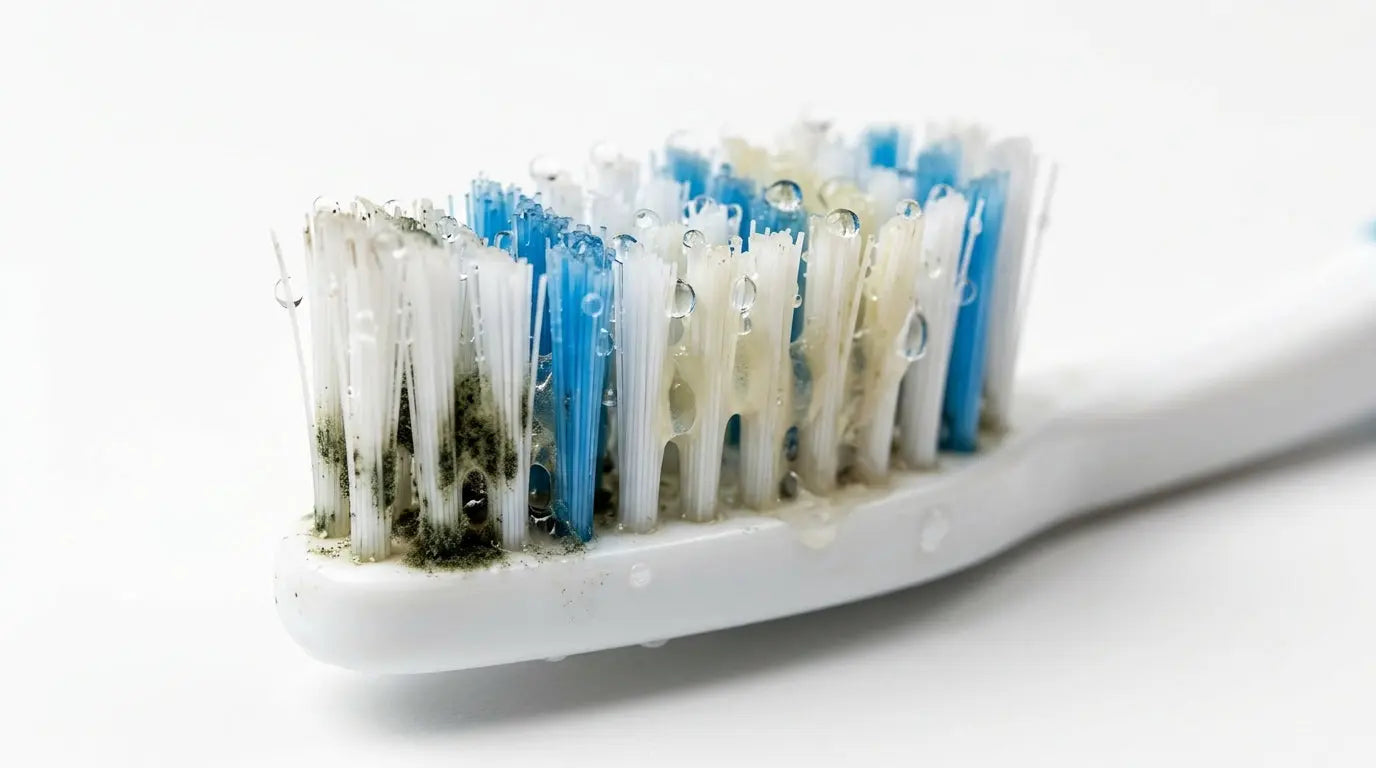
Over time, bristles deform, cleaning efficiency plummets, and a massive buildup of bacteria, mold, and organic debris traps itself within the bristles and the connecting gaps of the device. Backed by clinical research and microbiological studies, this article breaks down the hidden risks of overusing your brush head and explains why timely replacement is vital for your daily oral hygiene.

1. Deformed Bristles Reduce Plaque Removal by Over 30%
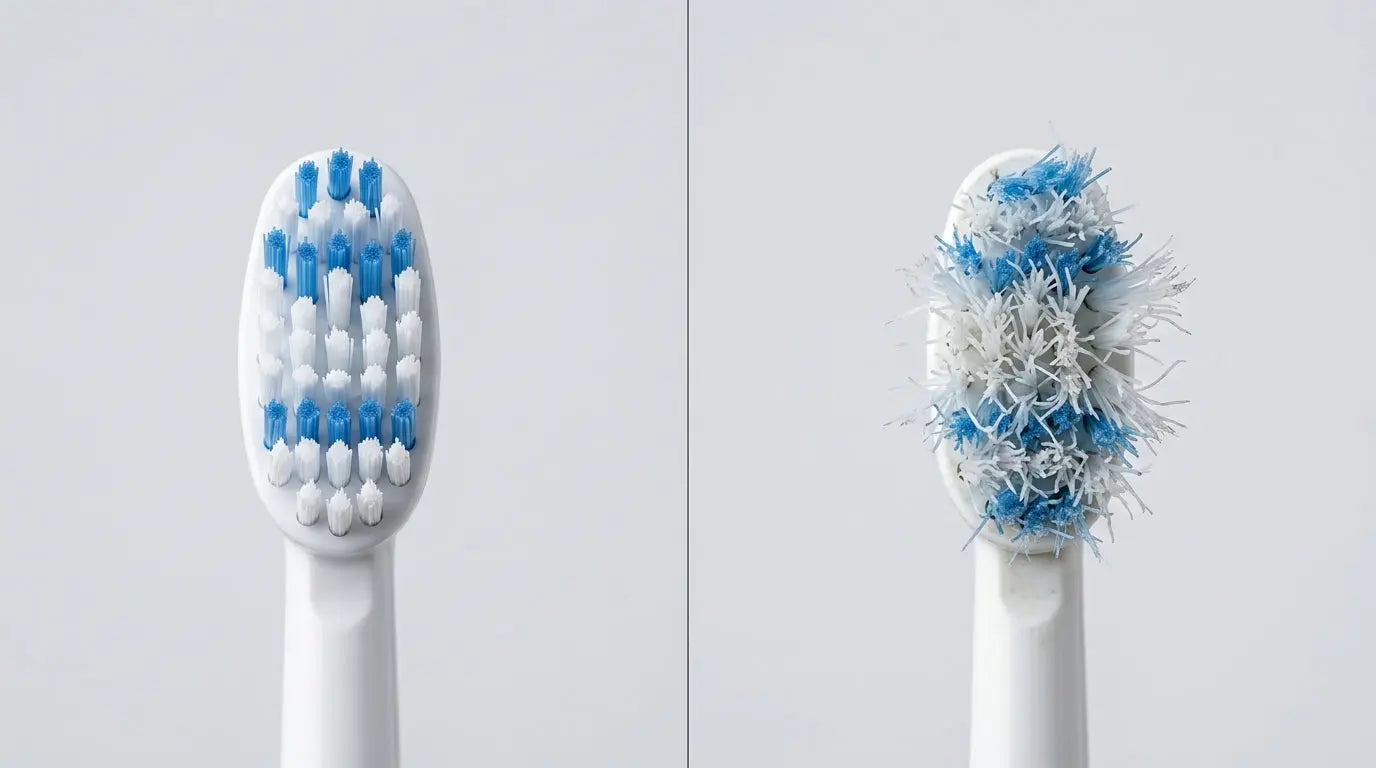
A new brush head features neat, upright bristles meticulously engineered to wrap around tooth surfaces, entering the gingival sulcus and interdental gaps. However, after months of high-frequency friction and vibration, the bristles inevitably bend, fray, and splay outward.
🔬 According to Dental Research:
Worn-out bristles lose over 30% of their plaque removal efficacy compared to new ones (Walsh et al., 2017). They fail to clear hidden debris, leaving your teeth vulnerable to decay.
Furthermore, these uneven, frayed bristles act like rough sandpaper, scratching your tooth enamel and irritating sensitive gum tissues, which often triggers unexpected redness and bleeding.

2. The Biofilm Trap: Mold and Bacteria in the Connectors
Bathrooms are humid microclimates. After each use, moisture, saliva, and toothpaste residue remain trapped at the base of the bristles and—more dangerously—inside the hollow connector gap between the brush head and the electric toothbrush body.
A long-term microbial survey revealed that toothbrush heads used for more than 3 months harbor significantly higher levels of opportunistic bacteria and fungal spores (Scott et al., 2018). The mold growing inside the dark connector is incredibly difficult to clean. Using a contaminated brush head repeatedly inoculates your mouth with pathogens, worsening bad breath, oral ulcers, and chronic gingivitis.
3. High Risk of Cross-Contamination
Harmful bacteria and fungi thriving on aging brush heads are highly transmissible. If multiple family members store their electric toothbrushes close together in a damp bathroom, microbial cross-contamination occurs via aerosol droplets or direct contact.
For vulnerable groups—including children, pregnant women, the elderly, and individuals with active periodontal disease—prolonged exposure to these germ-ridden brush heads severely elevates the risk of recurrent oral and upper respiratory infections (Marsh & Martin, 2019).
4. The "Hard-Brushing" Vicious Cycle & Mechanical Issues
When frayed bristles fail to provide that "squeaky-clean" feeling, users often unconsciously apply more physical pressure while brushing. This excessive force doesn't fix the lack of cleanliness; instead, it accelerates enamel erosion and gum recession.
Mechanically, an aging brush head develops loose internal gears. During high-frequency vibrations, this loose fit causes abnormal rattling noises and unstable operations, which dampens the sonic cleaning power and puts unnecessary strain on the toothbrush motor, shortening its lifespan.
🚨 4 Warning Signs to Replace Your Brush Head Early
While 3 months is the golden standard, toss your brush head immediately if you encounter any of the following scenarios:
表格
| Indicator | Specific Symptom | Action Required |
|---|---|---|
| Physical Wear | Bristles are visibly splayed, tangled, or falling out | Replace Immediately |
| Hygiene Fail | Black mold spots appear at the base or inside the connector; a persistent musty smell | Replace Immediately |
| Post-Illness | You have just recovered from a cold, flu, sore throat, or oral infection | Replace to avoid reinfection |
| Accident | The brush head drops onto the bathroom floor or gets cross-contaminated | Replace Immediately |
💡 Pro Tip: Most premium brush heads feature blue indicator bristles. When the blue dye fades halfway down or turns completely white, it is a built-in visual cue that the bristle integrity is compromised and needs replacement.

🛠️ Expert Tips to Extend Brush Head Hygiene
The Disassembly Rinse: After brushing, remove the brush head from the handle. Rinse both the bristles and the internal connector thoroughly under running water, then shake off excess moisture.
Upright, Dry Storage: Store the handle and head vertically in an open, well-ventilated area. Always close the toilet lid before flushing to prevent aerosol contamination.
Let the Motor Do the Work: Do not press hard against your teeth. Let the sonic vibrations do the cleaning to slow down bristle deformation.
Conclusion
Adhering to the 3-month replacement rule for electric toothbrush heads is a simple yet essential part of scientific oral care. Overused brush heads suffer from reduced cleaning performance, bristle damage, heavy microbial contamination and even mechanical failures.
By learning the warning signs and adopting proper daily maintenance habits, you can keep your toothbrush working efficiently, protect your enamel and gums from damage, and stay away from hidden bacteria and mold risks. Small routine changes will maintain your long-term oral health and a bright smile.
References
- Walsh, T., et al. (2017). Effect of bristle wear on plaque removal efficacy of powered toothbrushes. Journal of Dental Research.
- Scott, E., et al. (2018). Microbial contamination of personal oral hygiene devices in domestic environments. Journal of Applied Microbiology.
- Marsh, P. D., & Martin, M. V. (2019). Oral Microbiology, 5th ed. CRC Press.